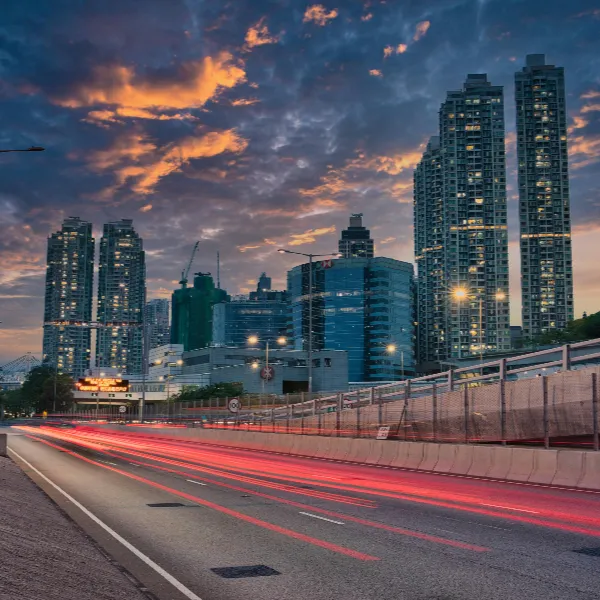
For a first New York trip, plan around three choices before anything else: how many days you have, where you will sleep, and which paid experiences are truly worth your money. Three to four days is the easiest first-timer length, Midtown or Lower Manhattan usually keeps logistics simple, and the subway plus walking will handle most of your movement.
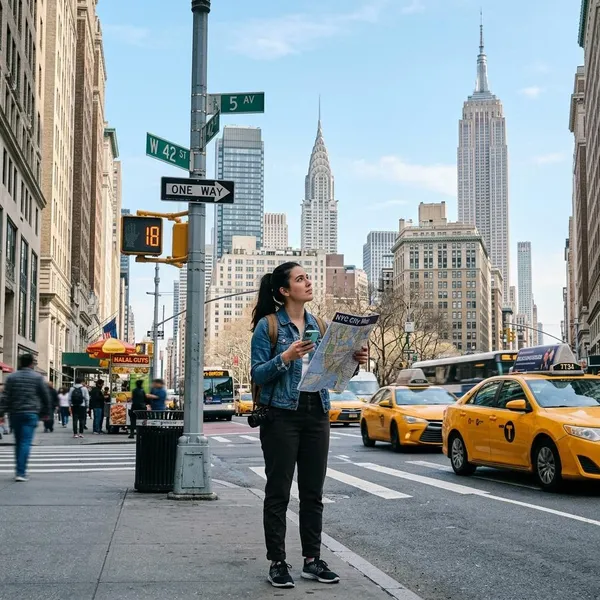
How many days do you need in New York?
Most first-time visitors do best with three to four days in New York. Two days can work for a fast highlights trip, while five or more days makes sense if you want museums, food neighborhoods, shopping, and slower mornings without cutting the famous sights.
Two days for the main highlights
With only two days, treat New York like a focused city sampler rather than a complete trip. Keep your route tight: one day for Midtown, Central Park, Times Square, and a skyline view; another for Lower Manhattan, the 9/11 Memorial, the harbor area, and the Brooklyn Bridge.
Three to four days for a balanced first trip
Three to four days is the safest choice for a first visit because it gives each day a clear purpose without making the trip feel like a race.
- Day one: Midtown, Central Park, Times Square, and an observation deck.
- Day two: Lower Manhattan, the 9/11 Memorial, harbor views, and Brooklyn Bridge.
- Day three: Brooklyn, a museum, Greenwich Village, or a Broadway evening.
- Day four: Add the High Line, SoHo, the Met, or extra time for shopping and food.
Five days or more for extra neighborhoods and museums
Five days or more lets you move beyond the first-time checklist. You can spend real time at the Metropolitan Museum of Art or the American Museum of Natural History, wander through SoHo or the West Village, and still keep classic sights like Central Park and the Brooklyn Bridge in your plan.
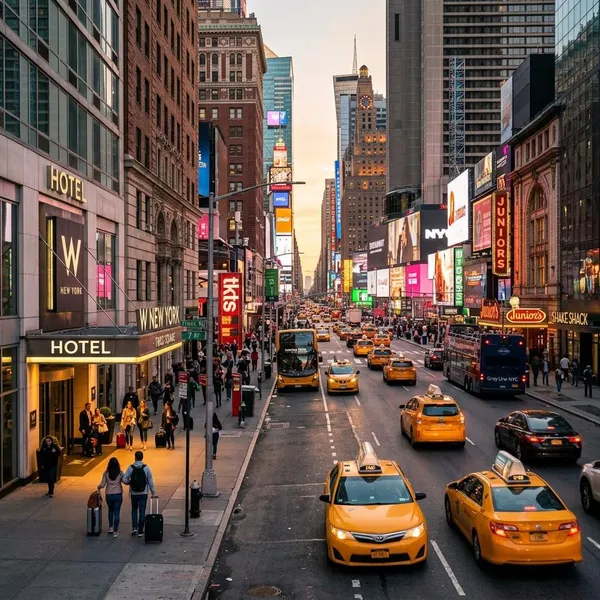
Where should first-time visitors stay in New York?
For a first trip, location matters more than room size. Before booking, check three things: walking distance to a subway station, how many transfers you need to reach Midtown and Lower Manhattan, and whether the area still feels convenient at night.
Midtown for convenience and major sights
Midtown is the easiest default for first-time visitors who want simple logistics. You are close to Times Square, Bryant Park, Rockefeller Center, Grand Central, Fifth Avenue, and several subway lines, so it is easy to build a day without constantly crossing the city.
Lower Manhattan for history and downtown energy
Lower Manhattan suits travelers who want history, waterfront views, and a slightly less Midtown-centered trip. It puts you close to the 9/11 Memorial, Wall Street, Battery Park, ferry connections, and easy routes into Brooklyn.
Brooklyn for a more local feel
Brooklyn can be a smart first-trip base if you pick a neighborhood with strong subway access. Brooklyn Heights, Downtown Brooklyn, and Williamsburg can give you restaurants, cafes, skyline views, and a calmer place to return to after busy sightseeing days.
Times Square for maximum centrality
Times Square is practical, not peaceful. Stay here if you want bright lights, Broadway theaters, late-night movement, and the comfort of being in the middle of the tourist map.
Outer neighborhoods for better value
Outer neighborhoods can reduce hotel costs, but only if the transit trade-off is reasonable. Long Island City in Queens is often worth checking because some hotels are only a short subway ride from Midtown, while farther-out areas may look cheap but eat into your day.
- Worth considering: lower nightly rate, direct subway line, safe-feeling walk from the station.
- Think twice: multiple transfers, very late-night returns, or a hotel chosen only because it is cheaper.
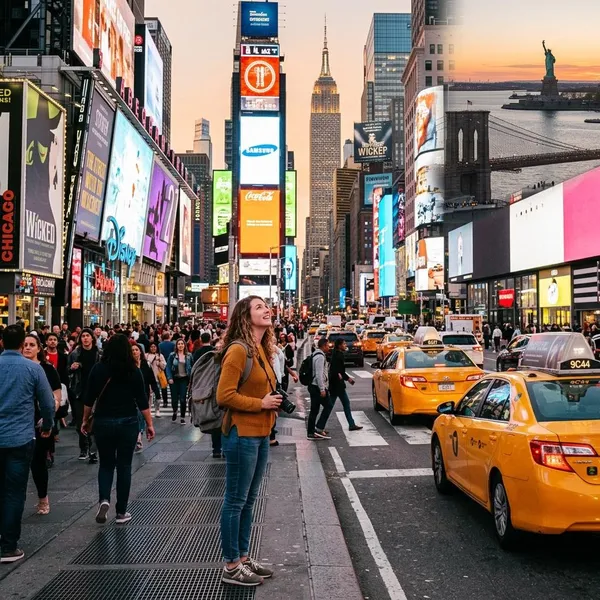
What are the must-see places in New York?
A strong first New York itinerary mixes four types of experiences: street energy, green space, skyline views, and history. You do not need every famous attraction; you need the ones that give the trip shape and variety.
Central Park for classic city scenery
Central Park is the easiest place to slow down without leaving the city. For a first visit, focus on the southern and middle sections rather than trying to cover the entire park: Bethesda Terrace, Bow Bridge, The Mall, and nearby lawns already give you the classic feel.
Times Square for the iconic first-time experience
Times Square is worth seeing once because it is so unmistakably New York. Go for the lights, crowds, screens, and theater-district buzz—not for calm, good value, or local charm.
Statue of Liberty for harbor views and history
The Statue of Liberty is best if you care about the symbolism and want a harbor experience, not just a quick photo. Visiting Liberty Island takes time, so book ahead and avoid squeezing it into a packed day.
If your trip is short, consider a lower-commitment harbor view from Battery Park, a ferry ride, or a route that lets you see the statue from the water. That choice keeps the icon in your trip without sacrificing half a day.
Brooklyn Bridge for skyline views
The Brooklyn Bridge is one of the best free experiences in New York. Walk it early if you want more space, and consider ending on the Brooklyn side so you can continue into DUMBO for waterfront views and food.
9/11 Memorial for modern history
The 9/11 Memorial adds a serious, reflective stop to a trip that can otherwise become only views, food, and entertainment. The outdoor pools do not take long, but they deserve unhurried attention.
Add the museum only if you have the emotional space and schedule for it. It is a deeper visit, not a quick filler between sightseeing stops.
An observation deck for city views
Choose one observation deck unless skyline views are a major priority for you. Top of the Rock is popular because you can see the Empire State Building in the skyline; One World Observatory gives a strong downtown and harbor perspective; Edge and the Empire State Building each have their own appeal.
- Best simple rule: pick the deck closest to the area you are already visiting.
- Best timing: sunset is beautiful but often pricier and busier.
- Budget check: one paid view is usually enough for a first trip.
Broadway for a classic New York night out
Broadway is a memorable splurge if you enjoy live performance or want a classic New York evening. Popular shows and prime seats can be expensive, but same-day discounts, rush tickets, or less famous productions can make it more manageable.
If theater is not your thing, do not force it just because it is famous. A rooftop drink, jazz club, night walk through DUMBO, or late dinner can feel just as "New York" for the right traveler.
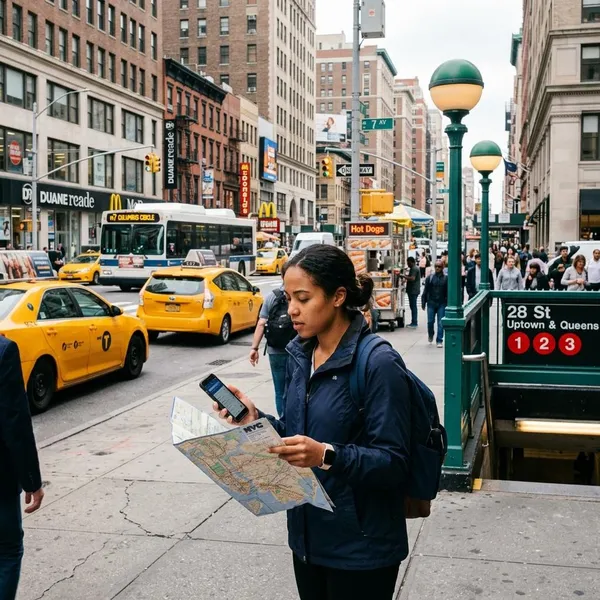
How do you get around New York?
Use the subway for longer trips, walk when neighborhoods are close, and save cars for moments when comfort matters more than speed or price. The main mistake first-timers make is assuming taxis are always faster; in Manhattan traffic, they often are not.
Use the subway for most longer trips
The subway is usually the best way to cross the city quickly and cheaply. Use a transit app, check uptown versus downtown direction, and pay attention to express trains so you do not skip your stop.
- With luggage: avoid peak commute times if possible.
- Late at night: check service changes before heading to the station.
- First ride: allow a few extra minutes to understand entrances and platforms.
Walk between nearby neighborhoods
Walking is often the best part of the trip, especially between areas like SoHo and Greenwich Village, Midtown and Central Park, or DUMBO and Brooklyn Heights. It lets you notice small streets, food stops, storefronts, and views you would miss underground.
Take buses for useful cross-town routes
Buses are useful for east-west trips across Manhattan, where subway routes can be awkward. They are also helpful if stairs are a problem or if you want to see the city while moving.
Use taxis or rideshares when convenience matters
Taxis and rideshares make sense for late nights, bad weather, airport transfers, tired feet, or traveling with someone who cannot handle subway stairs easily. They are also useful after a Broadway show if your hotel route feels inconvenient.
Check the route and price before assuming a car is the better choice. For short crosstown rides it may be worth it; for long trips through Midtown traffic, the subway may still win.
How much does a New York trip cost?
New York can be expensive, but the costs are not evenly spread. Hotels and paid attractions usually decide the budget; subway rides, walking, parks, bridges, and neighborhood exploring help keep the trip from becoming a constant spending exercise.
Hotels take the largest share of most budgets
Hotels are usually the cost that changes the whole trip. A modest, well-located room can still feel expensive, and prices rise quickly around holidays, major events, and popular travel weeks.
Food costs depend heavily on dining style
Food can be controlled more easily than lodging. You can keep costs reasonable with bagels, pizza slices, food halls, casual diners, and Chinatown or Queens food stops, then spend more on one dinner you actually care about.
- Low-spend day: simple breakfast, casual lunch, pizza or deli dinner.
- Balanced day: cheap breakfast, sit-down lunch, relaxed dinner.
- Splurge day: rooftop drinks, a popular restaurant, or a special tasting menu.
Subway travel keeps transport costs manageable
Transportation is one of the easier costs to control because the subway covers most tourist routes. If you walk and use trains, daily movement can stay modest compared with hotel and attraction spending.
Paid attractions can quickly raise daily spending
Observation decks, museums, ferries, guided tours, and Broadway tickets can turn a normal day into an expensive one. The practical move is to choose two or three paid highlights for the whole trip, then fill the rest with free or lower-cost experiences.
A common first-timer mistake is buying too many timed tickets. It can make the trip feel scheduled to the minute, with no room for weather, delays, or simply wanting to stay longer somewhere.
Free sights help balance the budget
Some of New York's best first-visit moments cost nothing. Use free sights to balance paid experiences instead of treating them as second-best options.
- Central Park for a slower break between busy areas.
- Brooklyn Bridge for skyline views.
- Times Square for a quick nighttime stop.
- Grand Central Terminal for architecture and atmosphere.
- DUMBO and Brooklyn Bridge Park for waterfront views.
- The 9/11 Memorial plaza for a meaningful downtown visit.

Conclusion
A first New York trip works best when you resist the urge to do everything. Give yourself three to four days if you can, stay somewhere with easy subway access, pick a few paid experiences that genuinely matter to you, and leave enough open space for walking, food, and unexpected stops—the city feels better when your plan has room to breathe.